
Proclaiming Jesus Christ in Evangelism
- Scripture Passage: Acts 4:1–37
1. Background: A Major Event in Jerusalem and the Reaction of the Leaders (Acts 4:1–4)
- Widespread Faith: Through the healing of the lame man and the proclamation of the Gospel, the number of believers grew to over 5,000 men. This became a monumental event throughout Jerusalem.
- Unbelief Among the Leaders: The Jewish leadership (the priests, the captain of the temple guard, and the Sadducees) did not want to accept or believe this reality, which led them to confront and arrest the apostles.
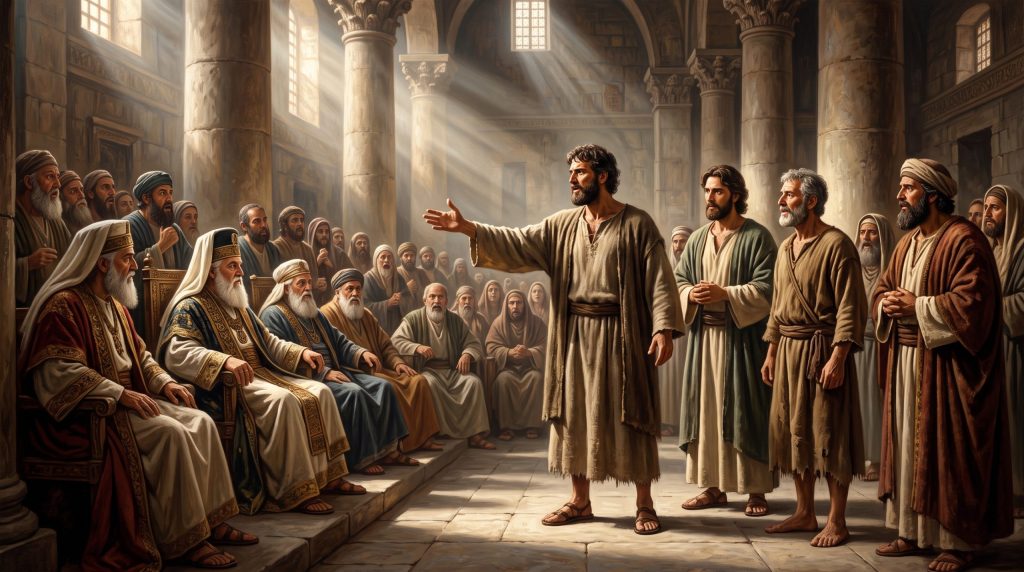
2. Peter’s Bold Confession Filled with the Holy Spirit (Acts 4:5–12)
- The Name of Jesus Christ: When summoned and questioned by the religious leaders, Peter, filled with the Holy Spirit, testified that the healing was accomplished solely through the name of Jesus Christ of Nazareth.
- The Cornerstone of God’s Kingdom: Peter proclaimed that although the rulers crucified Jesus, He became “the stone the builders rejected, which has become the cornerstone.” In this context, the building or house represents the Kingdom of God.
- The Only Way of Salvation: Peter delivered the definitive confession of faith: “Salvation is found in no one else, for there is no other name under heaven given to mankind by which we must be saved.”
3. The Prayer of the Disciples Grounded in the Word (Acts 4:13–31)
- Indisputable Evidence: Because the healed man stood right beside them and numerous eyewitnesses were present, the opposing leaders had nothing to say in refutation.
- Prayer of Faith in the Upper Room: Gathering with the believers at their base (the Upper Room), the disciples raised their voices together in prayer: “Sovereign Lord, You made the heavens and the earth and the sea, and everything in them.” This was a bold declaration of God’s absolute sovereignty over all creation.
- Fulfillment of Psalm 2: In verse 26, the disciples quoted David’s prophetic words from Psalm 2: “The kings of the earth rise up and the rulers band together against the Lord and against His anointed one.” They recognized that the opposition and persecution they faced from worldly powers were not coincidences, but events already prophesied in Scripture, taking place to fulfill what God’s power and will had decided beforehand.
4. The Mark of True People of God: Understanding Miracles and the Covenant
- Men in Fellowship with God: This chapter demonstrates that the disciples were true people of God who walked in direct communication and alignment with Him.
- Two Key Attributes: What verified them as people of God were two factors:
- The reality of the miraculous healing performed through Christ.
- Their deep spiritual understanding of God’s Word and its fulfillment.
- Miracles as an Instrument for Evangelism: The disciples recognized that miracles are essential tools and open doors for evangelism. As disciples of Jesus Christ, they knew exactly what message to deliver (Christ alone) and how God fulfills His covenant.
5. Proclaiming the Living Word and the Centrality of the Resurrection (Acts 4:32–37)
- God Works Through His Proclaimed Word: When we declare the Word of God, God works to bring it to completion. Because God fulfills His Word, we can take part in the same divine work when we understand Scripture and align our hearts with His desires.
- Word-Centered Prayer: A crucial element of the early church was that their prayers were rooted in the written Word of God.
- Unprecedented Unity: The community described in verse 32—where all believers were of one heart and mind and shared everything in common—marked an unprecedented spiritual movement in church history.
- The Resurrection as the Heart of Evangelism: The resurrection of Jesus was the central issue and proclamation of the time. While modern perspectives on the resurrection may vary, in that era it was the undeniable proof that the risen Jesus is the Christ. Without God’s eternal covenant, the resurrection would never have occurred.
6. Conclusion and Core Mission
- Knowing and Sharing Jesus Christ: Because God has provided salvation through no other name except Jesus Christ, the primary responsibility of an evangelist is to understand Jesus Christ deeply and proclaim Him boldly. This was the exact path walked by Peter and the early disciples.
Leave a Reply